

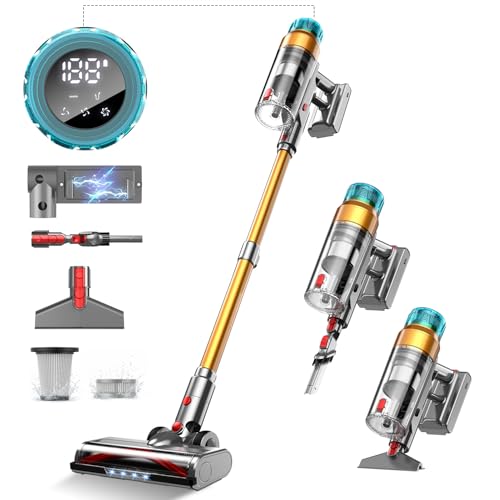
What is a Good Lightweight Vacuum Cleaner? Your Ultimate Guide to Effortless Cleaning
Tired of lugging a cumbersome cleaning machine around your home? Imagine a vacuum cleaner so light and agile, you barely notice you’re holding it. That’s the dream of a good lightweight vacuum, and thankfully, it’s a dream that’s easily within reach!
But with so many options out there, how do you pinpoint what truly makes a lightweight vacuum good? It’s not just about the number on the scale; it’s about finding the perfect balance of portability, power, and practicality for your specific needs.
This detailed guide will demystify the world of lightweight vacuums, helping you understand what to look for, how to choose, and how to get the most out of your nimble cleaning companion.
Why Go Lightweight? The Undeniable Benefits
Before we dive into the “what,” let’s quickly chat about the “why.” Opting for a lightweight vacuum cleaner comes with a host of fantastic advantages:
- Effortless Maneuverability: Easily navigate around furniture, under tables, and into tight corners without breaking a sweat.
- Back-Friendly Cleaning: Say goodbye to sore backs and tired arms! Lighter models are a godsend for anyone with mobility issues or just a general aversion to heavy lifting.
- Stairway Savior: Cleaning stairs becomes a breeze. No more wrestling a heavy upright or balancing a bulky canister.
- Quick Cleanups Made Simple: Perfect for everyday spills, pet hair, or a quick refresh before guests arrive. Their easy-to-grab nature encourages more frequent cleaning.
- Storage Solutions: Often more compact, they fit neatly into smaller spaces like closets, pantries, or utility cabinets.
- Ideal for Smaller Spaces: Apartments, dorms, and RVs benefit immensely from their reduced footprint and ease of use.
Defining “Good”: Key Characteristics of a Top-Tier Lightweight Vacuum
A “good” lightweight vacuum isn’t just one that weighs less; it’s one that delivers effective cleaning without compromise. Here’s what to look for:
-
The Right Weight (for You):
- What is “lightweight”? Generally, most people consider a vacuum under 10 pounds to be lightweight. Many excellent options are even under 5-7 pounds.
- Test it: If possible, lift it! What feels comfortable for one person might be heavy for another. Can you comfortably lift it to clean high spots or carry it up stairs?
-
Surprising Suction Power:
- Don’t mistake lightness for weakness! A good lightweight vacuum should still offer impressive suction, especially for its size.
- Look for models with strong motor ratings and efficient airflow designs. This is crucial for picking up dirt, dust, and pet hair effectively.
-
Power Source & Run Time:
- Corded vs. Cordless: Both have merits.
- Corded lightweight vacuums offer unlimited run time and often consistent, powerful suction. Great if you don’t mind plugging and unplugging.
- Cordless lightweight vacuums provide ultimate freedom and convenience. Crucially, check the battery life (run time). A good cordless model will offer at least 20-40 minutes of continuous cleaning on a single charge, especially if it has a boost mode. Look for models with swappable batteries or quick-charging capabilities.
- Corded vs. Cordless: Both have merits.
-
Maneuverability & Design:
- Swivel Steering: This allows the vacuum head to pivot effortlessly around obstacles.
- Low Profile Head: Can it glide easily under furniture, beds, and tables?
- Ergonomic Handle: Is it comfortable to grip and push?
- Convertibility: Many lightweight vacuums (especially stick vacuums) can convert into handheld units for versatile cleaning.
-
Effective Filtration:
- Especially important for allergy sufferers! A good lightweight vacuum should have a multi-stage filtration system, with some offering HEPA-level filtration to trap fine dust and allergens.
-
Dustbin Capacity & Ease of Emptying:
- Lightweight vacuums often have smaller dustbins. A “good” one will have a bin size appropriate for quick cleanups without needing constant emptying.
- Look for bagless models that are easy to empty with a single button press, minimizing contact with dust.
-
Versatile Attachments:
- A good lightweight vacuum should come with a few essential tools like a crevice tool for tight spaces, a dusting brush, and possibly an upholstery tool. Pet hair attachments are a bonus for furry friends.
-
Noise Level:
- While not always a deal-breaker, a quieter vacuum is generally more pleasant to use, especially if you have sensitive ears or live in close quarters.
-
Ease of Maintenance:
- Can you easily access and clean the brush roll (especially important for pet hair tangles)? Are the filters washable or easy to replace?
Types of Lightweight Vacuums (No Product Names Here!)
When looking for a good lightweight vacuum, you’ll generally encounter a few categories:
- Stick Vacuums: These are often the go-to for lightweight cleaning. They resemble an upright but are much slimmer and lighter, often converting into a handheld unit. They’re excellent for quick cleanups on hard floors and low-pile carpets.
- Handheld Vacuums: The ultimate in portability, these small units are perfect for spot cleaning, car interiors, upholstery, and hard-to-reach areas. They complement a larger vacuum well.
- Compact Uprights/Canisters: Some manufacturers offer scaled-down versions of traditional upright or canister vacuums that are specifically designed to be lighter. These can offer more dustbin capacity or slightly more robust cleaning for carpets than stick vacuums, while still being much easier to maneuver than their full-sized counterparts.
Step-by-Step Guide: How to Choose Your Ideal Lightweight Vacuum
Ready to find your perfect match? Follow these steps:
-
Step 1: Assess Your Primary Needs.
- What will you use it for most? Quick daily cleanups, pet hair, stairs, reaching high ceilings, or cleaning your car?
- How often will you use it? Daily, a few times a week, or just for emergencies?
- What’s your living situation? Small apartment, large house, or something in between?
- Do you have pets or allergies? This will influence suction and filtration needs.
-
Step 2: Understand Your Floor Types.
- Mostly hard floors (hardwood, tile, laminate)? Many lightweight vacuums excel here. Look for soft brush rolls to protect surfaces.
- Mostly carpets (low, medium, or high pile)? You’ll need stronger suction and potentially a motorized brush roll to agitate carpet fibers. Some lightweight models are better suited for low-pile only.
- A mix of both? Look for features like brush roll on/off switches or self-adjusting floor heads.
-
Step 3: Consider Your Power Preference (Corded vs. Cordless).
- Cordless is king for convenience, but check run time and charge time.
- Corded offers consistent power and no battery worries, but you’ll be tied to an outlet.
-
Step 4: Prioritize Features Based on Steps 1-3.
- If stairs are a big deal, convertibility to a handheld is a must.
- If you have pets, strong suction and a good brush roll design are critical.
- If allergies are a concern, HEPA-level filtration should be high on your list.
- If storage is tight, look at the overall dimensions when stored.
-
Step 5: Set a Realistic Budget.
- Lightweight vacuums span a wide price range. Knowing your budget will help narrow down options, but remember that investing a little more often pays off in performance and durability.
-
Step 6: Read General User Experiences (Not Product Reviews).
- Instead of looking for specific product names, look for patterns in what users generally praise or criticize about types of lightweight vacuums. Do people often complain about battery life on certain cordless models? Are some types consistently praised for pet hair removal? This gives you an idea of what features truly perform well in real-world scenarios.
Pro Tips for Lightweight Vacuum Ownership
Once you’ve found your ideal lightweight cleaning companion, here’s how to make the most of it:
- Empty Regularly: Lightweight vacuums have smaller dustbins. Empty the dustbin after every few uses (or even every use if it’s very full) to maintain optimal suction.
- Clean Filters Frequently: This is crucial for maintaining suction and air quality. Follow the manufacturer’s instructions for washing or replacing filters.
- Brush Roll Maintenance: If you have long hair or pets, regularly check and clean the brush roll for tangled hair and debris. Many lightweight models have easy-access brush rolls for this reason.
- Utilize Attachments: Don’t let those extra tools gather dust! Use the crevice tool for tight spots, the dusting brush for delicate surfaces, and the upholstery tool for furniture.
- Charge Cordless Models Thoughtfully: Don’t let the battery completely drain too often. Follow the manufacturer’s recommendations for charging and storage to prolong battery life.
- Store Smart: Keep your lightweight vacuum in an easily accessible spot so it’s always ready for quick cleanups.
Common Mistakes to Avoid When Choosing & Using a Lightweight Vacuum
Even with the best intentions, it’s easy to stumble. Here are some pitfalls to steer clear of:
-
Mistake #1: Prioritizing Weight Over Suction.
- Don’t assume lighter means less powerful, but don’t compromise suction for a few ounces! A vacuum that’s light but doesn’t clean effectively is just a fancy dust collector. Ensure it has enough power for your primary cleaning tasks.
-
Mistake #2: Underestimating Battery Life Needs.
- For cordless models, don’t just look at the maximum run time. Consider the run time on higher power settings if you’ll be tackling carpets or tougher messes. A 60-minute run time might drop significantly when using boost mode.
-
Mistake #3: Neglecting Filter Maintenance.
- A clogged filter severely impacts suction. Forgetting to clean or replace filters is one of the quickest ways to degrade your vacuum’s performance.
-
Mistake #4: Not Matching Vacuum Type to Floor Type.
- A stick vacuum designed for hard floors will struggle with high-pile carpet. Make sure your chosen lightweight vacuum is genuinely suitable for your home’s predominant floor surfaces.
-
Mistake #5: Overfilling the Dustbin.
- Trying to squeeze “just one more pass” out of a full dustbin will decrease suction and put unnecessary strain on the motor. Empty it before it’s completely full.
The Bottom Line
A “good” lightweight vacuum cleaner is a game-changer for anyone seeking a more efficient, comfortable, and frequent cleaning routine. It’s about finding that sweet spot where portability meets power and practicality. By understanding your needs, knowing what features truly matter, and avoiding common missteps, you’ll be well on your way to enjoying a cleaner home with minimal effort. Happy cleaning!
Frequently Asked Questions(FAQ)
Q. What exactly defines a “lightweight” vacuum cleaner?
A. Typically, a lightweight vacuum cleaner weighs under 8-10 pounds, with many popular stick or handheld models falling into the 3-7 pound range. This significantly reduces the effort required to carry, push, and maneuver the cleaner compared to traditional upright or canister vacuums.
Q. What are the primary advantages of choosing a lightweight vacuum?
A. The main benefits include superior portability for easy movement between rooms and up stairs, reduced physical strain during cleaning, simple storage in compact spaces, and quick grab-and-go convenience for everyday messes and spills. They are ideal for quick clean-ups and homes with multiple levels.
Q. Are lightweight vacuums as powerful as heavier, traditional models?
A. Not necessarily less powerful. While traditionally heavier vacuums often boasted more powerful motors, modern lightweight vacuums, especially high-end stick and cordless models, offer surprisingly strong suction thanks to advanced motor and battery technology. They are often powerful enough for most daily cleaning tasks, particularly on hard floors and low-pile carpets.
Q. What different types of lightweight vacuum cleaners are available?
A. The most common types include stick vacuums (both cordless and corded), handheld vacuums (often used for spot cleaning or cars), and compact upright vacuums. Cordless stick vacuums are particularly popular for their versatility, maneuverability, and ease of use as a primary or secondary cleaner.
Q. What key features should I look for when buying a good lightweight vacuum?
A. Look for strong suction power, a decent battery run time (for cordless models, typically 30-60 minutes on standard mode), effective multi-stage filtration (HEPA is a plus), versatile attachments for different surfaces and tasks, excellent maneuverability, and an easy-to-empty dustbin. Adjustable power settings and a comfortable ergonomic design are also beneficial.
Q. Can a lightweight vacuum be sufficient as my only vacuum cleaner?
A. Yes, for apartments, smaller homes, or homes with mostly hard floors and low-pile carpets, a good lightweight vacuum (especially a powerful cordless stick model) can serve perfectly as your primary cleaner. For larger homes with deep-pile carpets or significant pet hair, you might need a more powerful, high-end model, or it could function best as a secondary cleaner for quick tidy-ups.
Q. Do lightweight vacuums handle pet hair effectively?
A. Many modern lightweight vacuums are designed with pet owners in mind. Look for models specifically advertised for pet hair, which often feature tangle-free brush rolls, stronger suction, and specialized attachments like mini-motorized tools to effectively pick up fur from upholstery and tight spaces.
Q. How important is battery life for a cordless lightweight vacuum?
A. Battery life is crucial for cordless models. A longer run time (typically 30-60 minutes on standard mode) allows you to clean more area on a single charge. Consider your home size and cleaning habits; if you need to clean larger spaces, prioritize models with longer run times, quick charging, or swappable batteries.
Q. Are lightweight vacuums suitable for all floor types, including hard floors and carpets?
A. Most good lightweight vacuums are designed for multi-surface cleaning. Look for models with brush rolls that can be turned off for hard floors (to prevent scratching) and engaged for carpets. Some even feature intelligent sensors that automatically adjust suction based on the floor type.
Q. What is the typical price range for a high-quality lightweight vacuum cleaner?
A. Prices can vary significantly based on brand, features, and power. You can find basic models for around $100-$200, but a good quality, feature-rich lightweight vacuum often ranges from $250-$500. Premium models, especially those with advanced technology and powerful motors, can go upwards of $600-$800.

Leave a Reply